Summary: A falling pool waterline can reflect evaporation, splash-out, maintenance or a leak. For Sarasota homeowners noticing more top-ups this fall, a controlled comparison is more useful than a universal daily-loss number. Record the change, account for rain and automatic filling, and ask about a bucket test before assuming the shell needs repair. Danny's Pools of Southwest Florida evaluates pool cracks and related repairs; your observations can help focus that assessment.
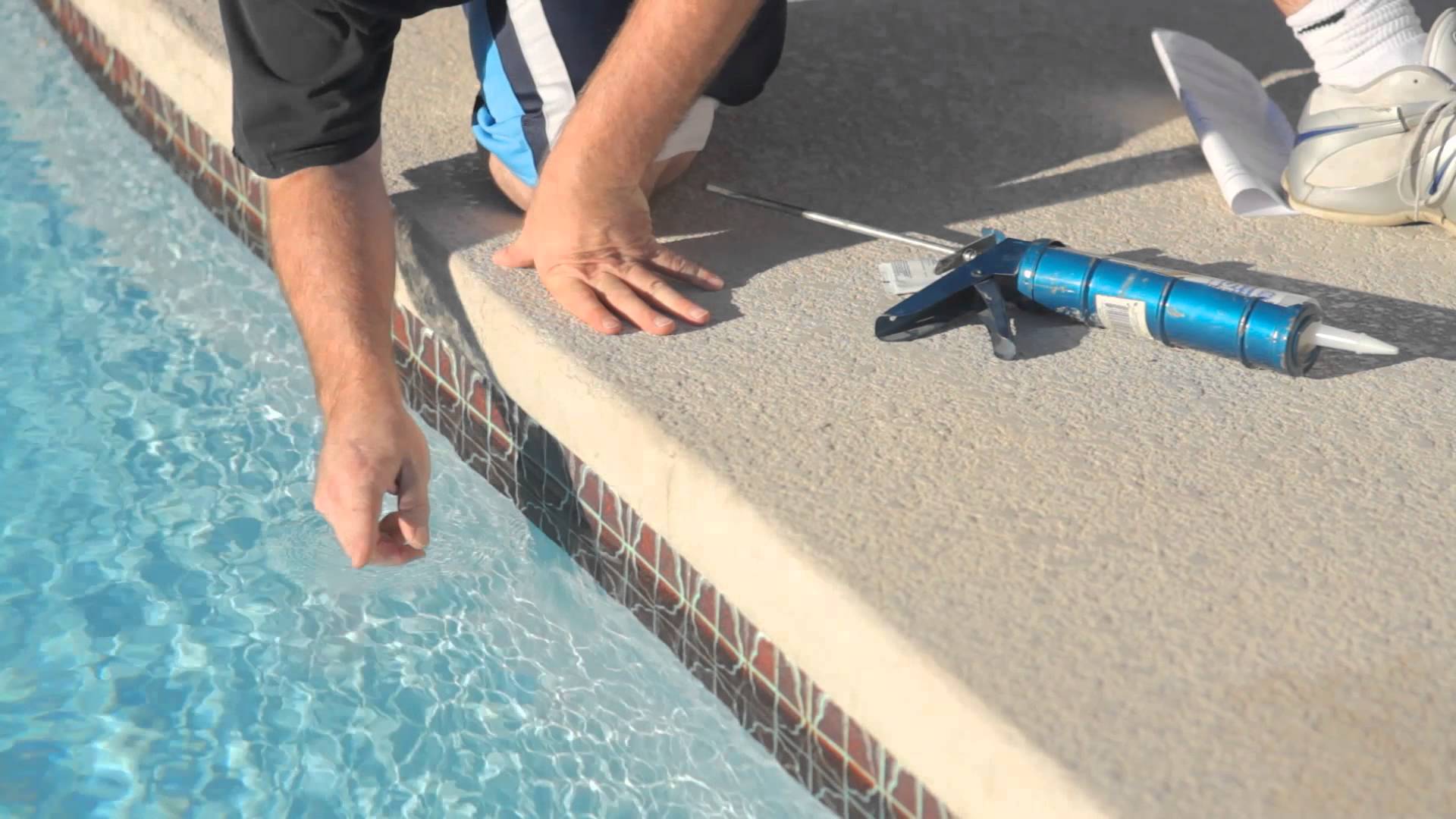 Illustrative image from Danny's Pools' repair service page. Pool-edge repairs should follow an assessment; a photograph alone cannot identify the source of water loss.
Why might pool top-ups become more noticeable in fall?
The National Weather Service describes September and October as the wind-down period for the regional summer thunderstorm pattern. As regular summer showers become less dependable, you may notice the water you add more readily. That seasonal context does not tell you whether this week's water loss is normal for your pool.
Evaporation also depends on the conditions around the water. Research from the University of California, Davis identifies wind and the moisture difference between the water surface and surrounding air as important factors. Pool heating and exposure matter, so a cooler day does not automatically mean negligible evaporation. Compare observations from your own backyard rather than borrowing a neighbor's top-up schedule.
What can lower the waterline besides a leak?
EPA WaterSense identifies several routes for pool water loss, including evaporation, cleaning, leaks and splashing. The timing matters. A drop after filter backwashing or a busy afternoon of swimming is different evidence from a repeated drop while the pool is unused.
- Note swimming, splashing, water-feature use and recent service work.
- Record rainfall and any water added by a hose or automatic fill.
- Ask whether cleaning or backwashing discharged pool water during the period you are comparing.
- Use the same reference point and record the date, time and change in level, rather than estimating how long the hose ran.
The point is to separate water leaving through normal activities from unexplained loss. A short, consistent record gives the person assessing the pool something more useful than an isolated photograph of a low waterline.
How can a bucket comparison help distinguish evaporation from a leak?
A bucket comparison measures the vertical drop in a separate container against the drop in the pool over the same period. If the pool loses more than the bucket, that supports further investigation. It does not locate a leak or establish which repair is needed.
The City of Lake Oswego publishes a 24-hour procedure with normal pump operation resumed after marking the levels. Before trying it, confirm a suitable setup and automatic-fill settings with your pool professional. Refilling during the comparison can hide the result.
- Start at the pool's normal operating water level and use a sound bucket filled near the top.
- Set the bucket securely on a pool step, where it cannot tip over, and mark the bucket and pool starting levels separately.
- Keep swimmers out and avoid refilling or other activities that change the water level during the comparison.
- Compare the drop at both marks after 24 hours. Restart after rain or if the setup is disturbed.
Can automatic filling hide a water-loss problem?
Yes. Autofill can replace lost water while the pool appears to stay at its usual level. EPA's residential pool guide notes that automatic filling can obscure water loss and that a malfunctioning fill valve can also send water to an overflow. A steady waterline alone is not proof that everything is working correctly.
Tell your service professional whether the pool has autofill and whether you have noticed it running more often. Ask for its operation to be checked and for a plan to monitor loss without allowing the water to fall below the equipment's operating requirements. Avoid changing unfamiliar valves or bypassing controls to conduct a test.
Does a visible crack prove where the water is escaping?
A visible crack is a reason to have that area assessed, not a complete diagnosis. Its appearance does not establish whether it reaches through the shell or is actively leaking. Likewise, the absence of an obvious crack does not identify what is happening in plumbing or around fittings.
Ask what evidence supports the proposed repair and how the result will be checked afterward. Danny's Pools' crack-and-tile repair service describes evaluation of surface and structural cracks, including testing to determine whether a crack is leaking. Share the water-level record and any comparison results when requesting that assessment.
When should you request an inspection instead of continuing to top up?
Arrange an assessment when a controlled comparison shows the pool dropping more than the bucket, the loss changes suddenly, or repeated observations remain unexplained. Note any persistent wet area or visible damage, but let the professional determine whether it is connected to the pool.
Do not wait for a test to finish if the water is falling rapidly or approaching the equipment's minimum operating level. Contact your pool professional for operating instructions. Do not drain the pool to search for a leak; inspection and any necessary draining should be planned for the actual pool and site.
What information makes the assessment more useful?
Send the dates and measurements, whether the pool was used, recent rainfall or refilling, your normal heating and water-feature settings, and any recent work. Include clear photographs of visible concerns without labeling them as the confirmed leak location. Ask whether further testing is needed before approving a patch or a larger project.
About this guide: Published by Danny's Pools of Southwest Florida for Sarasota-area homeowners investigating unexplained pool water loss. An on-site assessment is needed for a diagnosis and repair recommendation.
Get a clearer answer before choosing a pool repair
Tell Danny's Pools what you have observed and ask about an assessment of visible cracks or pool-edge damage. Bring your water-level record so the next step addresses the evidence.
Request a Pool Repair Assessment