Uneven Pool Deck Pavers in Sarasota: Reset or Replace?
A low or raised paver does not automatically mean replacing the whole deck. Understand the support, joints and drainage before choosing a repair or a cosmetic treatment.
Quick Summary
Uneven concrete pool-deck pavers may be reset when the affected area and its underlying cause can be corrected; widespread or recurring movement needs a broader evaluation. Cleaning and sealing will not restore the deck's level or repair its support. For Sarasota homeowners preparing for winter visitors, start with the walking route around the pool. Danny's Pools of Southwest Florida offers decking and renovation services. This guide explains what to observe and how to discuss a suitable repair scope.
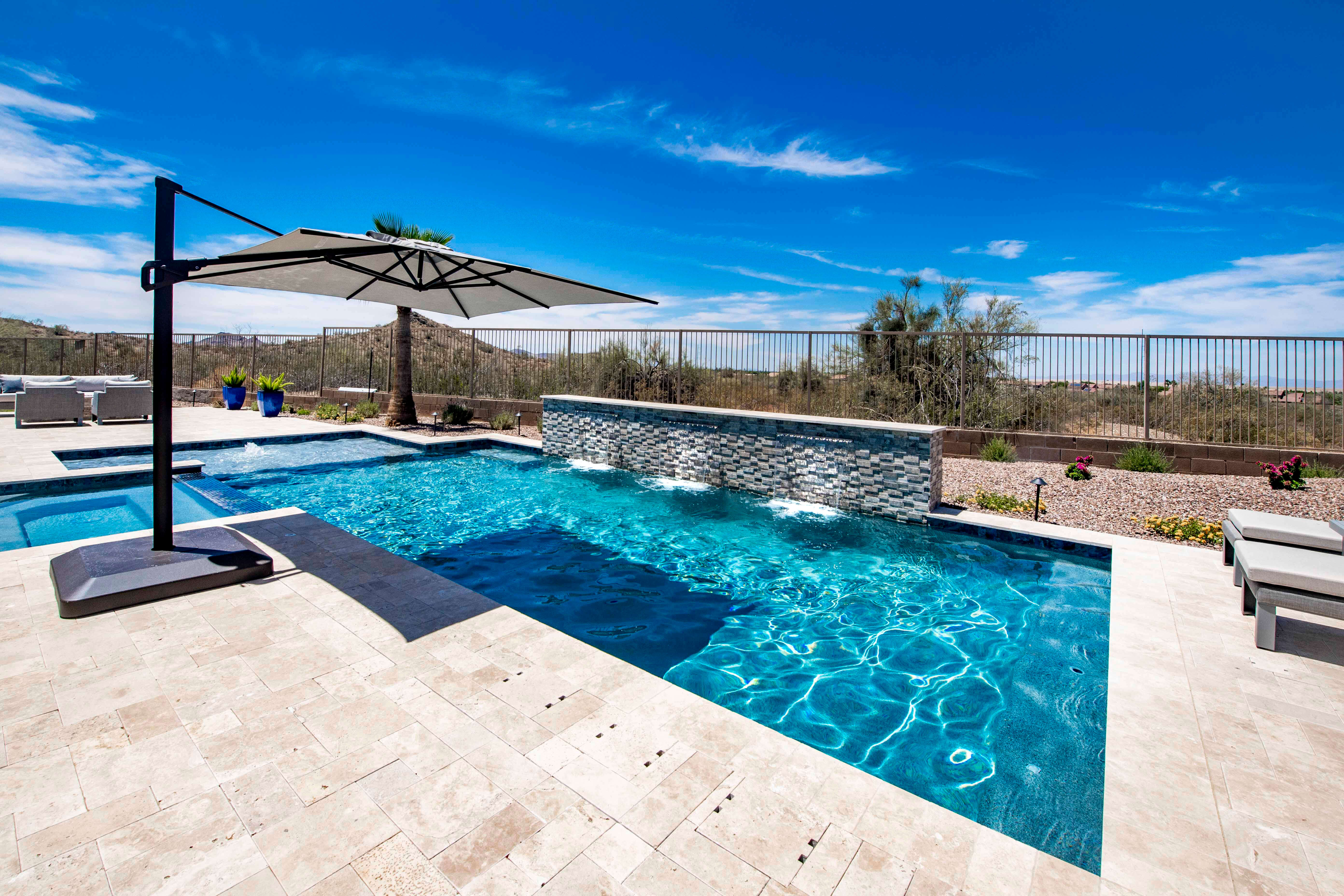
Illustrative image from Danny's Pools' decking service page. It shows the walking surface around a pool, not a diagnosed settlement problem or a verified local repair. The deck material and support system cannot be established from the photograph.
Does an uneven paver mean the whole pool deck has failed?
Not necessarily. Interlocking concrete paving consists of individual units supported by bedding, base and soil, with joints and edges helping hold the system together. The Concrete Masonry & Hardscapes Association's maintenance guide describes how limited depressions can sometimes be corrected by lifting and reinstalling the pavers after addressing settlement.
That does not establish what is happening beneath your deck. Ask which layer has moved and how the proposed work addresses it. A surface photograph may identify a place to inspect, but it cannot show whether the supporting material is sound.
What should you notice before guests use the pool area?
With late-November gatherings and winter visits ahead, look at the route people use between the house, outdoor seats and pool entry. A familiar uneven edge may be less obvious to someone carrying a tray or visiting the backyard for the first time. Keep people away from an unstable area while arranging an assessment.
Take an overall photograph showing where the problem sits, then a closer view from the side. Note whether it is one unit, a broad low patch or a row separating at the edge. Record when you first noticed it and whether the same area was repaired before. Do not rock loose units with your foot to demonstrate the problem.
Identify the nearest door, step, drain, screen-enclosure post or pool coping in the photograph.
Describe what you observe: raised edge, rocking unit, opening joint or water remaining in a low area.
Note whether the condition changes after ordinary rain or irrigation, without creating a flood to test it.
Tell the contractor whether the affected route is the main way in and out of the pool area.
Why can pavers sink, separate or move again after a repair?
CMHA identifies several possible contributors to depressions, including settlement in the supporting soil or base and loss of bedding or joint material. It also identifies inadequate edge restraint as a reason units can spread. These are possible mechanisms, not a diagnosis that Sarasota soil or a particular storm caused your problem.
Ask the assessor to distinguish a low area from a raised neighboring area and to check the actual elevations. Include any repeated ponding or nearby runoff in the discussion. For recurring movement, ask what the new assessment will examine that the earlier repair did not.
When might resetting pavers be a reasonable option?
Discuss a limited reset when the affected area can be defined, the units remain usable and the support or edge problem can be corrected. Ask the contractor to show the proposed repair boundary and explain whether nearby units must also be lifted to complete the work properly.
If movement extends across several areas, returns after repair or meets a drain, coping or another fixed feature, request a wider evaluation before accepting a small cosmetic patch. A larger assessment does not automatically mean full replacement. It should establish which parts can remain and which conditions need correction.
Ask whether existing units will be reused, whether matching replacements are available for damaged pieces and where any visible old-to-new transition will fall. If adjoining pool features also need alteration, discuss the work together through a renovation consultation.
Will cleaning, sealing or adding joint sand make the deck level?
No. These tasks serve different purposes. CMHA's cleaning and sealing guidance explains that sealers can help limit staining and joint stabilizers help retain joint material, but neither adds structural capacity to the pavement. They cannot substitute for correcting uneven support.
Have the condition and existing joint system identified before buying a product. Ask the paver and product suppliers which cleaner, joint material or sealer is compatible. Around a pool, also ask about the finished surface's slip resistance when wet and the specified return-to-use instructions.
Understand what surface treatments can and cannot do
This guide concerns interlocking concrete pavers. Travertine, marble, porcelain and pavers bonded over a slab may need different assessment and repair methods. Tell the contractor what material and installation records you have rather than treating every jointed pool deck as the same system.
What should a proposed repair explain?
Ask for a description of the observed condition, the area to be opened and the support, edge or drainage work included. Establish what happens if lifting the units exposes a condition that changes the recommended scope. Separate resetting units from optional cleaning or sealing so each task has a clear purpose.
Before scheduling, discuss access to the house and pool while the work area is unavailable, protection of adjoining finishes and how the completed area will be checked. Request product-specific care and return-to-use instructions. An assessment of your actual deck is more useful than a replacement recommendation based only on its age.
Published by Danny's Pools of Southwest Florida for Sarasota-area homeowners evaluating existing pool decking. The company's decking service includes installation and refinishing in several materials; a consultation can establish whether the concern fits a deck project or requires coordination with other pool work.
Start with the area that is moving
Send Danny's Pools an overview and close-up of the affected deck, its location and any previous repair history. Discuss the condition and the right next assessment before selecting a new finish.
SarasotaConcrete PaversPool Deck RepairOutdoor Living
Common Questions
Frequently Asked Questions
They may be reusable if they remain in suitable condition. Ask which units will be lifted, whether damaged pieces need replacement and how any replacement color or pattern will be matched.
No. Sealing is a surface treatment. It does not correct the deck's elevations or repair movement in the support beneath the pavers.
No. A wet or low deck area does not establish a pool leak. Describe any separate pool-water loss and have the source assessed rather than choosing a repair from the puddle alone.
No. The material and installation method matter. Have the deck identified, including whether units are sand-set or bonded over a slab, before selecting a repair method.